
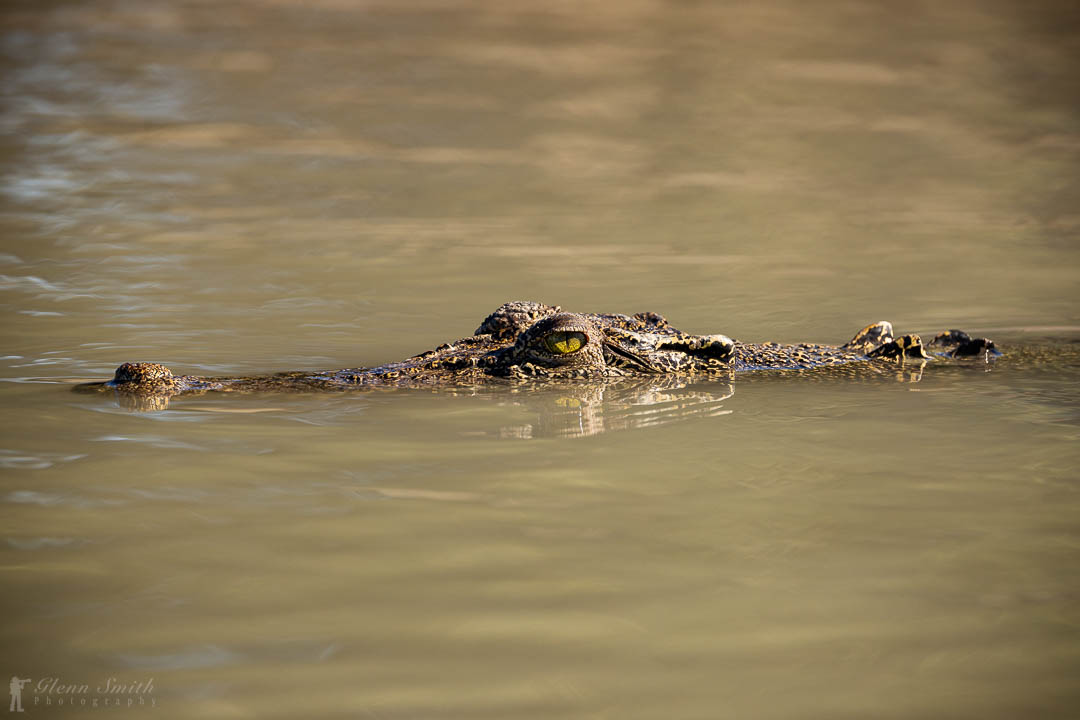
In 26 years of cruising the Kimberley coast, every guest who’s travelled with us has seen a fat “salty” or, saltwater crocodile. Yet the most interesting question to ask the crew when they point one out is often the simplest: “How on earth did you see that?”
Through binoculars, the crocodile is unmistakable. Lower them, and it becomes a length of grey timber again. The crew can show you what first caught their eye: the outline of a jaw, perhaps, or a row of ridges casting tiny shadows across a back. By the end of the excursion, you find yourself studying the next mudbank quite differently.

Another great example is the rock wallaby, including the elusive Monjon, the smallest of it’s species on earth. Spotting these tiny creatures on the steep Kimberley cliff faces is a true challenge.
That’s the pleasure of watching wildlife on a Kimberley cruise. You might see dugongs, sea turtles, dolphins, reef sharks, rock wallabies and remarkable birdlife. What stays with you is learning how to read the coastline well enough to spot something for yourself.
How do Kimberley tides affect the wildlife you’ll see?
A mudbank makes a fine resting place for a salty, but consider how briefly it exists. In parts of the Kimberley, the difference between high and low water can reach about 11 metres. A bank broad enough to hold a large crocodile this morning can disappear altogether beneath the afternoon tide. When our crew plan a tender excursion, knowing when to look matters as much as knowing where.
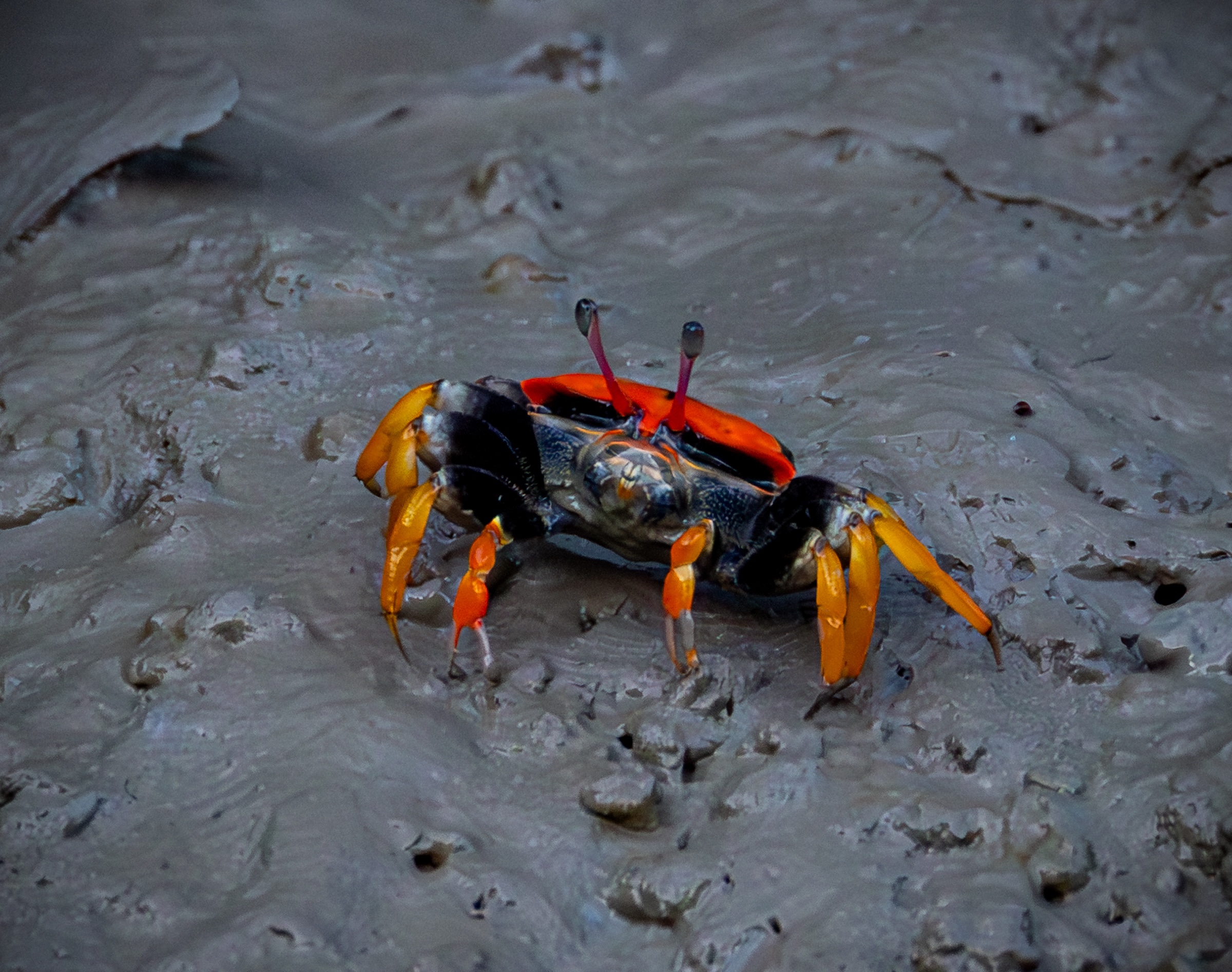
Now look beyond the crocodile to the mangroves. On a rising tide, fish can move in among the roots. As the water drains away, the mud lies open and shorebirds walk out to feed. Mud Skippers and Red Claw crabs take over the shore’s edge. If you could sit in the same spot all day, you’d see fish swimming through a patch of mangrove where, a few hours later, a bird might stand ankle-deep. Who gets to use a stretch of coastline, and how, can depend on the hour.
What wildlife can you see at Montgomery Reef?
When the tide falls at Montgomery Reef, seawater pours off the reef platform in streams and cascades. From a tender, the effect is extraordinary. The reef appears to rise from the ocean. What you’re actually watching is the water level in the surrounding channels falling while water is still draining off the reef.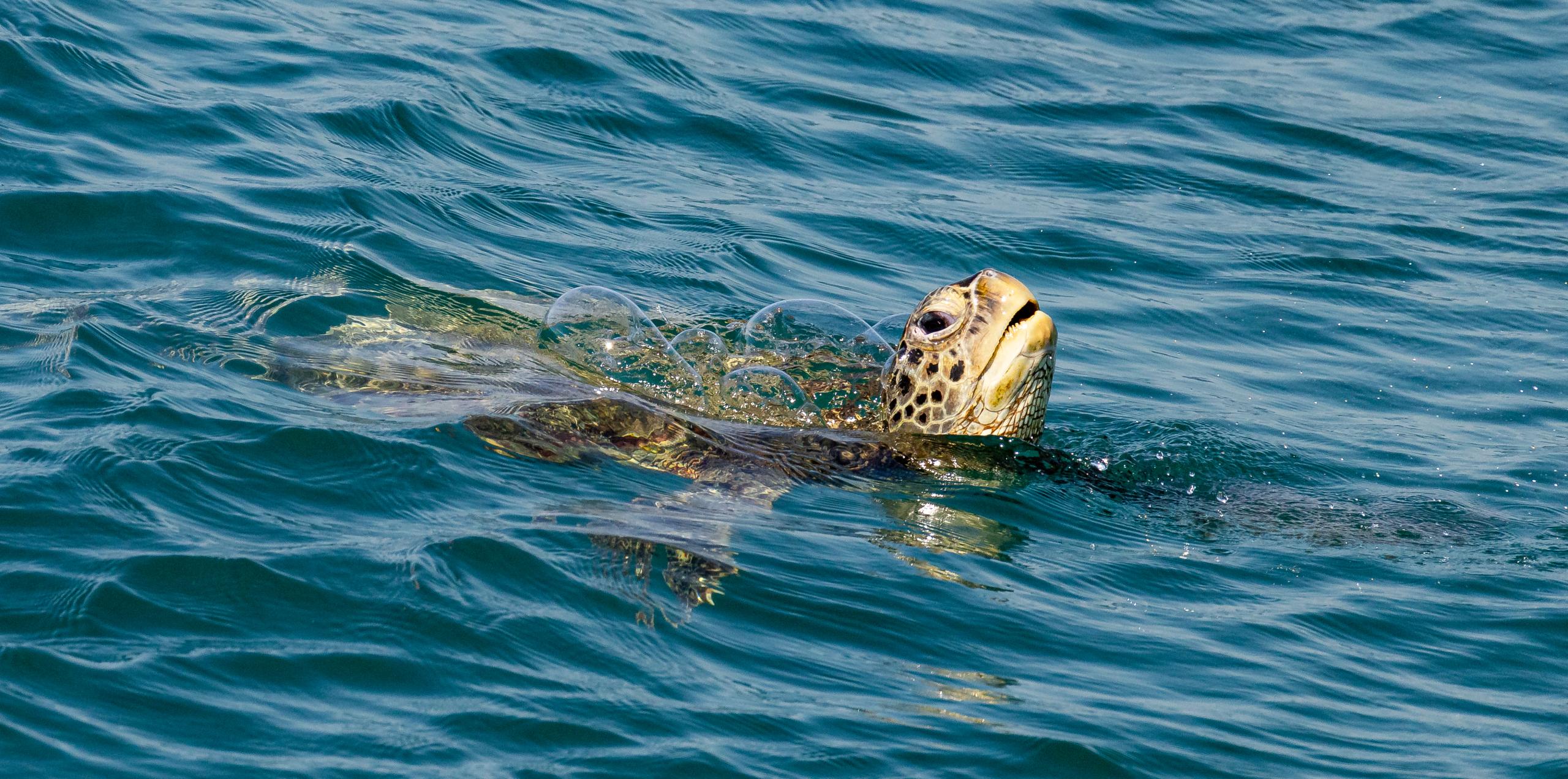
By all means photograph the cascades. Then lower the camera and let your eyes settle on one quieter patch of channel. A turtle has to surface to breathe. You might see its head for a moment, make out the curve of its shell and then watch both slip away. Look back towards the exposed reef and there are the birds, already making use of ground that was underwater earlier. That’s why we love exploring here by tender. Once you’ve taken in the scale of Montgomery Reef, there’s time to notice something as small as a turtle’s nose.
Will I see dugongs, dolphins and sharks on a Kimberley cruise?
The Kimberley is dugong country, but they are notoriously hard to spot. These marine mammals graze on seagrass and come to the surface for air. How much of a dugong might you actually see? Sometimes just a rounded back, a breath and a patch of smooth water. A brief glimpse leaves room for a good conversation with the crew. Did you see a fin? What shape was the back? Did it surface again? Even an uncertain sighting teaches you what to watch for next time.
Dolphins offer another surprise. Several species use Kimberley waters, including the Australian snubfin and the Indo-Pacific humpback dolphin. Reef sharks are a possibility in the shallows, too. With only 21 guests aboard Discovery One, there’s time to compare observations. The guest beside you may have watched the animal itself while you were following the ripple it left behind. 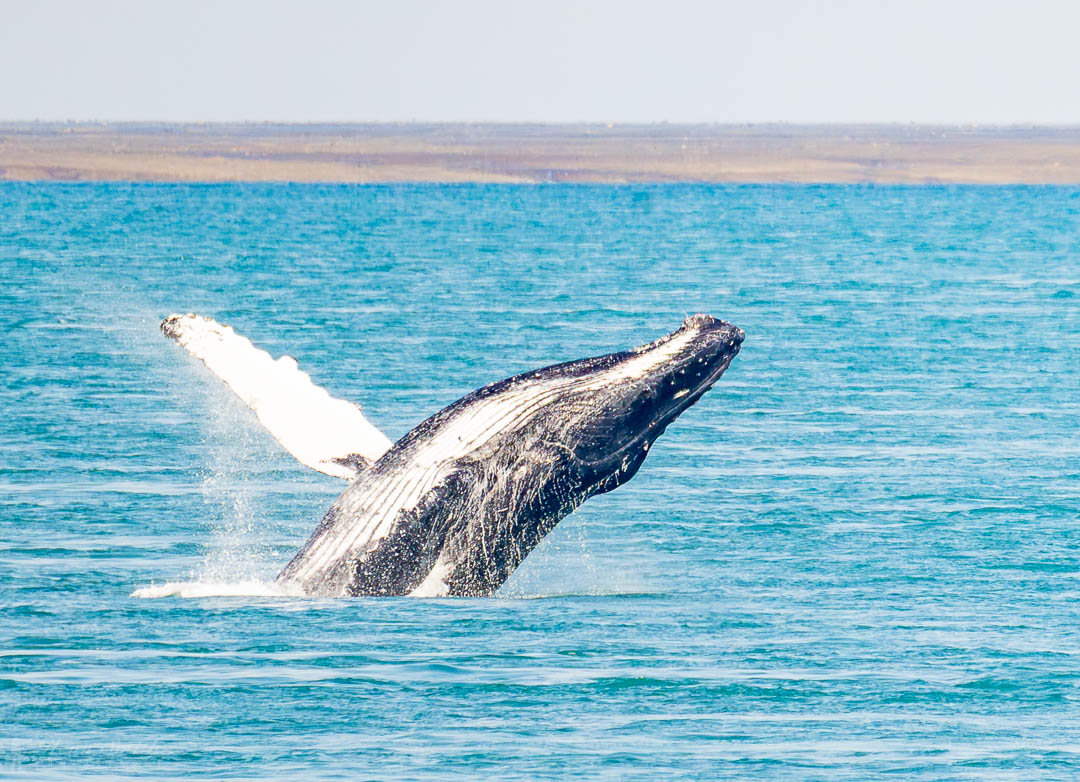 Between you, you can often put together a much better picture.
Sharks are also a strong presence on our Kimberley cruises. Reef sharks flit through shallow channels and the resident Tawny Nurse sharks love to come to the boat to check us out. Watching these large silent predators circling in the watch lights is a magnificent sight.
Late May to late September is Humpback whale season. The Kimberley coast offers warm, calm waters where mothers give birth and nurse calves. At Discovery One we treasure each whale encounter and our itineraries are flexible enough to watch a baby Humpback show off it’s new-found breaching skills until it tires and joins it’s mother on their travels back to the Antarctic feeding grounds.
Discovery One visits Montgomery Reef on every expedition. With only 21 guests and expedition tenders that access the reef’s shallow channels, you experience it at a depth no large ship can offer.
What birds will I see on a Kimberley cruise (even if I’m not a birdwatcher)?

Start with one bird and stay with it for a minute. A sea eagle is easy to enjoy through binoculars, but a little shorebird working the waterline can be just as absorbing. Watch where it puts its bill. Does it probe the soft mud or pick something from the surface? Does it keep pace with the retreating water? By the time you ask the crew its name, you’ll have something much more interesting to ask about as well. Back aboard, there are books to turn to and usually someone else who saw the whole performance from a different angle.
The Kimberley is home to over 300 bird species and you are likely to come across multiple variations of Ospreys, Eagles, Egrets, Terns and Kingfishers, as well as the iconic Brown Booby and the Pied Oystercatcher.
 Whether you bring a phone on a Kimberley small ship cruise or join one of our annual photography voyages, that habit of watching pays off. On selected departures, photographer Glenn Smith helps guests experiment with light and timing. On our annual photography cruises, Glenn Smith is always happy to share what he’s learnt: how to read the light, when to press the shutter and how a change in aperture can make a bird stand out against the mangroves. Guests tell us the dawn light is worth the early alarm. By sunset, they’ve got a few new tricks to try, and of the nicest things to bring home is knowing what you’d do differently the next time a bird turns into the light.
How big can a Kimberley pearl oyster grow?
 Think of the dinner plate waiting for you back aboard. A silver-lipped pearl oyster can grow to roughly that size, up to 30 centimetres across. If you travel on our Kimberley Highlights cruise, the pearl harvest tour at Cygnet Bay Pearl Farm gives you a chance to see the animal behind the pearl. You come hoping to see the small, precious thing inside and find yourself marvelling at the creature that held it.
How does Discovery One protect Kimberley wildlife?
The remoteness of the Kimberley is part of its appeal, but the coast we travel has long been known and cared for by its Traditional Owners.
 We follow local guidance about where we can land, leave shells where they belong, carry our rubbish back aboard and give animals room. Discovery One is ECO-certified through Ecotourism Australia. For us, one measure of a good encounter is a simple one: the bird carries on feeding, and we get to watch.
So when someone in the tender quietly offers you the binoculars and points towards an unremarkable patch of mud, take them. And on the way back, keep an eye on the opposite bank. There’s a particular pleasure in being the one who spots the next salty first.
Kimberley cruise wildlife FAQs
Will I definitely see a saltwater crocodile? In 26 years, every guest who has travelled with us has seen one: nearly 7,000 people across more than 300 voyages.
Can you see many bird species in the Kimberley? Yes. The Kimberley is home to over 300 bird species and you are likely to come across multiple variations of Ospreys, Eagles, Egrets, Terns and Kingfishers, as well as the iconic Brown Booby and the Pied Oystercatcher.
What marine wildlife lives in Kimberley waters? You might see dugongs, sea turtles, dolphins, reef sharks and Humpback whales. The Kimberley Coast offers a warm, calm and nutrient rich environment to support it’s rich marine life.
How many guests travel on Discovery One? Just 21, so there’s time to compare sightings with the crew and your fellow guests.
Is Discovery One eco-certified? Yes. Discovery One is ECO-certified through Ecotourism Australia.
Ready to spot your first salty? Explore our Kimberley cruise itineraries and departure dates.
Experience the Kimberley Properly
Aboard Discovery One, we believe the Kimberley is best experienced slowly, respectfully and with deep local knowledge. With only 21 guests onboard, more than 25 years of Kimberley operational experience, and access to remote tidal systems larger vessels cannot reach, our Kimberley boat cruises offer a more immersive and personal way to experience this extraordinary coastline.
Because this is not simply a cruise. It is one of the last great tidal wilderness systems left on earth. Join us.