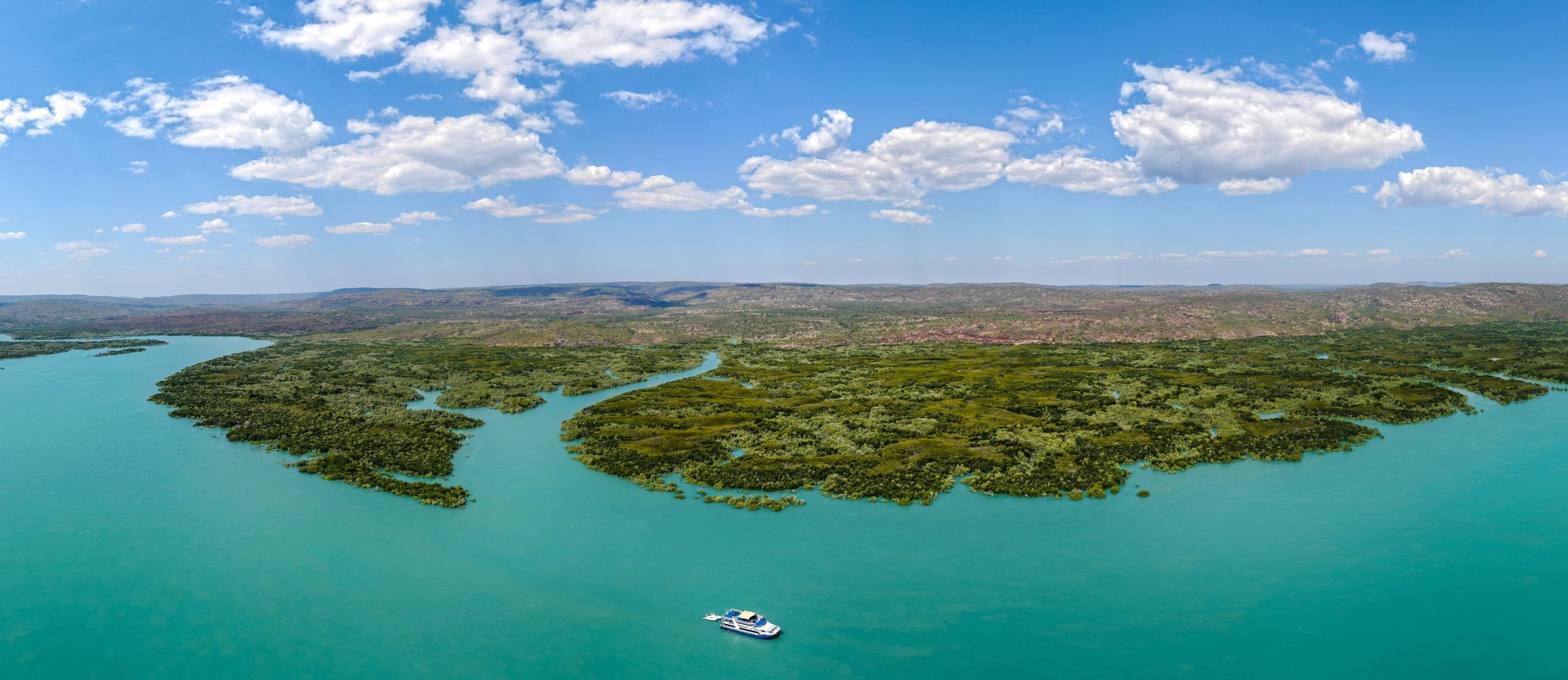
The Kimberley tides influence almost every day of your cruise: when we explore by tender, where we land, which waterways we enter and when natural spectacles reveal themselves. Aboard Discovery One, our captain and crew work with those changing conditions to make each outing count.
You might leave a bay with water lapping against its cliffs and return to find a broad shoreline beneath them. At Montgomery Reef, what looked like open ocean can become a landscape of cascading water.
Here, even the scenery refuses to stand still.
How big are the Kimberley tides?
In parts of the Kimberley, the difference between high and low water can reach around 11 metres. Picture the height of a three-storey building. That is the change in water level that can occur on a daily basis, depending on the time of year.
The range varies along the coast and throughout the lunar cycle. The wide, relatively shallow continental shelf helps explain why this region experiences such large tides. Islands, bays and narrow passages then influence how that water moves locally.
For guests on Kimberley coast cruises, the result is extraordinary: a coastline that changes character within hours.
For the captain, it means that knowing when to arrive matters just as much as knowing where to go.
Entire reef systems appear from beneath the sea. Waterfalls form where there were none hours earlier. Narrow gaps between cliffs become raging tidal rivers.
Who sets the timetable? Nature has a say
There are holidays where every activity starts at precisely the same time each day. A Kimberley expedition has a different rhythm.
A creek may need more water before a tender can enter. A landing may become easier as the tide changes. A narrow channel may require waiting for more manageable currents.
Discovery One itineraries are flexible and get decided on a daily basis to optimise visits to each location. This way every cruise is unique and there is plenty of time to allow for wildlife, weather and tides to shape our journey.
Our captain considers tidal predictions alongside weather, daylight, water depth and conditions on the spot. The crew might adjust the order of excursions or choose an alternative location.
That flexibility is part of exploring well. You can settle into the journey while the team handles the planning—and explains why today’s adventure starts when it does.
Montgomery Reef: the ocean’s great reveal
Among the experiences that draw people to Kimberley small ship cruises, Montgomery Reef is particularly memorable.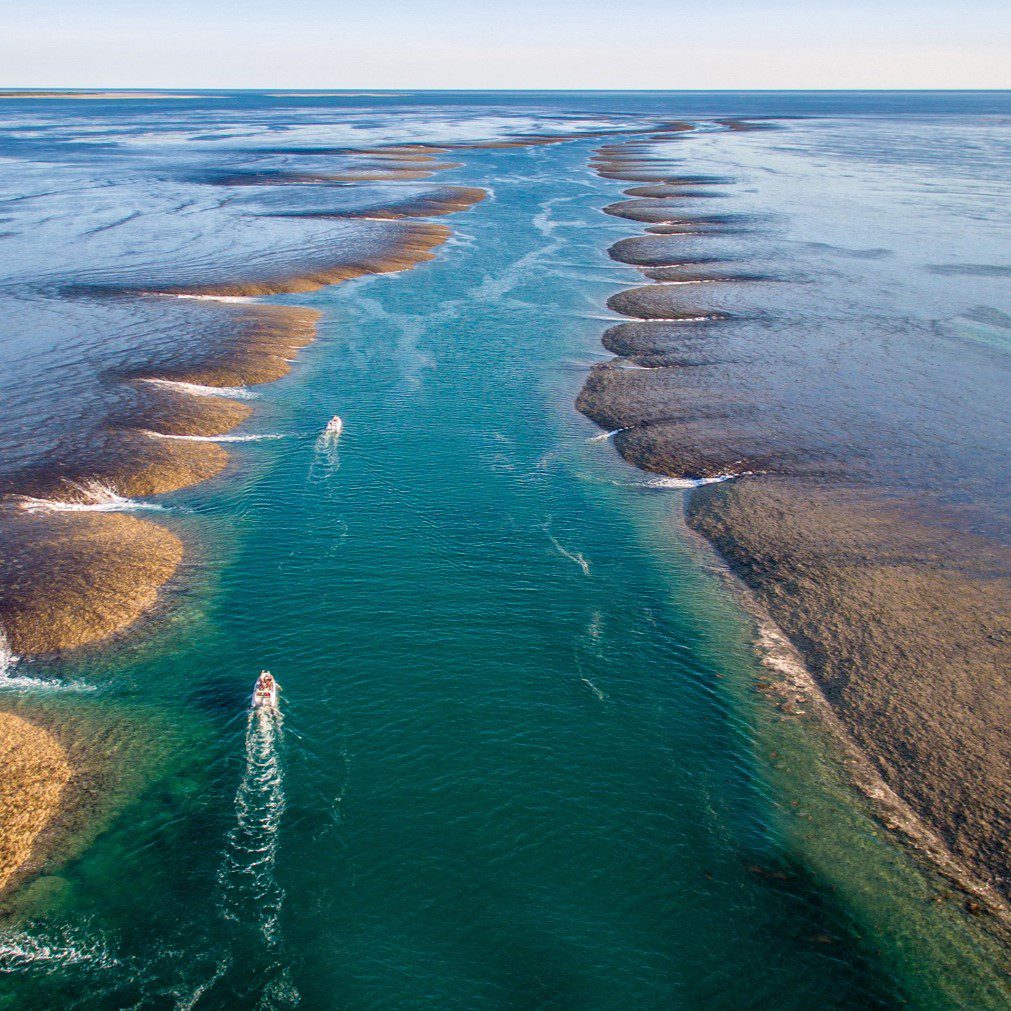
As the tide falls, seawater drains from the reef platform, pouring through channels and cascading over its edges.
The reef appears to rise from the sea. In reality, the water around it is retreating.
From a tender, where conditions permit, you can watch the transformation unfold close to water level. First you notice a disturbance. Then a channel takes shape. Soon there is flowing water where, earlier, the reef was submerged.
It rewards patience. Put the camera down occasionally and take in the movement, sound and scale.
When researching Montgomery Reef, remember that the display changes with the tidal cycle. No photograph can promise exactly what you will see—and that is part of its fascination.[/caption]
Horizontal Falls: a place to pause and understand
At Garaan-ngaddim, or Horizontal Falls, tidal water encounters narrow gaps in the coastal ranges. Water levels on either side can differ as the tide moves, creating powerful flows through the openings.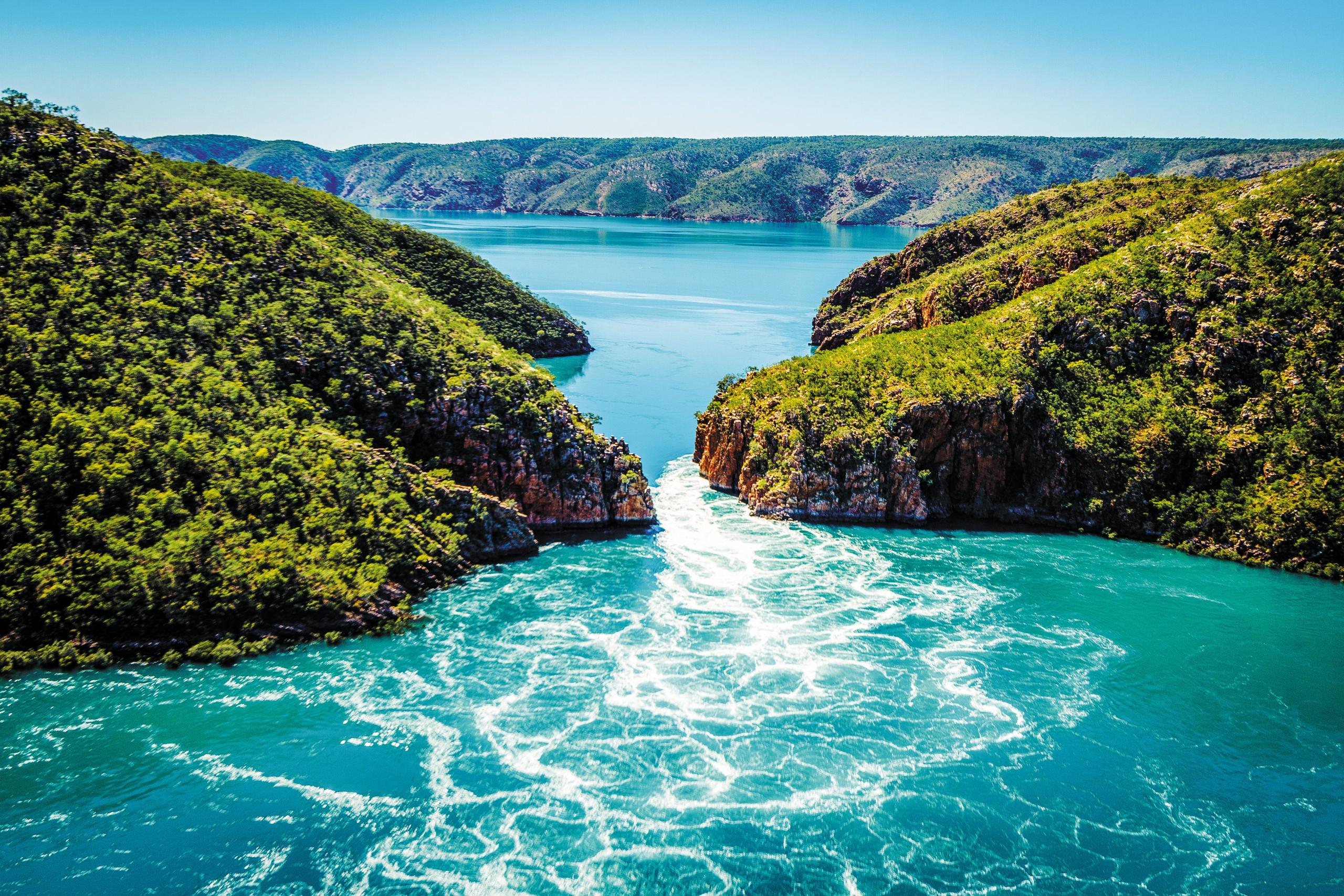
The scene changes as currents build, ease and reverse. Understanding that movement adds another dimension to the view.
This is also a culturally significant place on Dambeemangarddee Country. Dambimangari’s visitor guidance asks people to approach quietly and respectfully.
Experiencing Horizontal Falls does not depend on travelling through the gaps. The surrounding landscape, moving water and cultural significance deserve attention in their own right. Viewing arrangements follow current permissions, operating requirements and conditions.
Discovery One visits Montgomery Reef and Horizontal Falls on every expedition. With only 21 guests and expedition tenders that access the shallow channels, you experience it at a depth no large ship can offer.
One coastline, many Traditional Owners
A journey along the Kimberley passes through distinct Countries, each with its own Traditional Owners, knowledge and responsibilities.
Across Broome, the Dampier Peninsula, the islands and northern coastline, these include Yawuru, Nyul Nyul, Bardi Jawi, Mayala, Dambimangari, Wunambal Gaambera and Balanggarra, alongside other Traditional Owner groups whose Country relates to the particular route. The Kimberley Land Council identifies these seven groups as representing most of the Kimberley coastline through its saltwater advisory group.
Mayala Country includes islands and interconnected waters in the Buccaneer Archipelago and King Sound. Farther north, Wunambal Gaambera people describe their land and saltwater Country as their living home.
Travelling respectfully means recognising those differences, following local access protocols and listening to the people who speak for each place. A welcoming-looking beach is not automatically an invitation to land.
Spring tides or neap tides: which is better?
Despite the name, spring tides have nothing to do with springtime.
Around new and full moons, the Sun and Moon’s tidal effects combine to produce a greater difference between high and low water. These are spring tides. Around the quarter moons, the range is generally smaller: neap tides.
Neither is universally “better” for a cruise.
Larger ranges can produce dramatic reef displays and stronger currents. Smaller ranges offer different conditions for exploration. The best timing depends on the location and activity.
Tell our team what excites you most. We can help you understand the itinerary without suggesting that one moon phase guarantees the perfect holiday.
The wildlife follows its own timetable, too
For wildlife, a changing tide means changing opportunities.
Exposed shorelines provide feeding areas for birds. Rising water reaches mangrove edges. Reefs, seagrass and tidal creeks form connected habitats rather than separate attractions.
Dambimangari’s visitor guide describes Sea Country supporting turtles, dugongs, whales and dolphins, among other marine life. What you encounter depends on habitat, season and conditions.
Look beyond the headline sightings. Watch where birds gather. Notice the newly exposed shoreline or the mangrove roots disappearing beneath rising water.
With the crew helping interpret what you see, an apparently quiet creek can become one of the day’s most interesting discoveries.
Why a small group makes it personal
With just 21 guests, there is room for conversation as well as exploration.
Ask why the water is swirling around a headland. Find out why we are visiting a bay now rather than later. Share the bird you spotted with someone beside you.
Our tenders bring these observations closer, while the crew helps with boarding and explains the conditions for each outing. Follow their guidance: water levels and landing conditions can differ from one excursion to the next.
That is the pleasure of small boat Kimberley cruises – time to notice, ask and understand.
By the end of your journey, you may find yourself watching the shoreline differently. The tide becomes something you recognise in exposed rock, moving water and the day’s unfolding plans.
Explore our article https://discoveryone.com.au/field-notes/cruises/which-kimberley-cruise-is-right-for-me/ or speak with the Discovery One team to find your journey.
Because this is not simply a cruise. It is one of the last great tidal wilderness systems left on earth. Join us.